
Japanese folks aren’t kidding when it comes to chopstick manners! Dining with Japanese? They’re likely to be understanding if you’re not savvy with all chopstick protocols. But knowing even a bit about local etiquette can help make a good impression, earn respect, and promote positive interaction.
Even though completely mastering chopstick rules may seem tough, embracing these simple guidelines takes you closer to seamless chopstick politeness:
1. Learn How to Hold Chopsticks Properly
Holding chopsticks correctly can be easier said than done. Observe how others are doing it, and be patient with yourself. To truly learn, practice is essential. Consider using a children’s training clip or beginner chopsticks at home until you get the hang of it. You’ll find that when you hold them properly, they’re much easier to use.
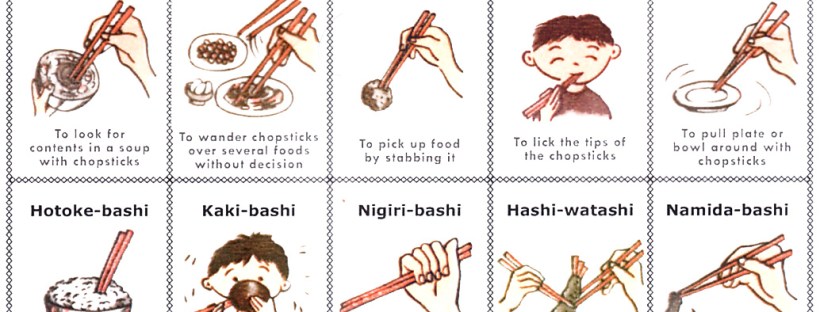
Avoid stabbing any piece of food on the plate or bowl, or holding the chopsticks together in one hand like a spear or knife. Don’t hold two chopsticks in your fist, as it resembles an attacker’s stance or a dangerous grandmother going to her knitting club. This is known as 握り箸 (nigiri-bashi), where you grip chopsticks tightly with one hand, and 刺し箸 (突き箸) or sashi-bashi (tsuki-bashi), where you then proceed to stick or stab the dish with chopsticks.
When handling difficult foods, such as tofu, use slight pressure to lift from underneath and gently raise it to your mouth. With tofu, you generally only get one try without committing a taboo. If done correctly, you’ve completed your mission and may advance to the next level of chopstick mastery. If you go for the middle of a block of tofu (especially with too much force), you might end up slicing it in half, and then your chances are over.
2. Not Eating Directly from Shared Dishes
A key aspect of Japanese dining etiquette involves not eating directly from communal dishes. Instead, transfer food from shared plates to your own before enjoying your meal.
In my own experience, this rule may be less strict when surrounding yourself with close friends and family in Japan. However, it’s important to observe this practice in more formal settings or when dining with unfamiliar company. It’s not uncommon to find ourselves following this etiquette without consciously realizing it after some time.
3. Making the Most of Your Chopstick Holder
In many restaurants, you’ll be provided with a handy chopstick holder—a small wooden or ceramic block designed to hold your chopsticks when not in use. When taking a break from eating, simply place your chopsticks onto this holder.
If you’re using disposable chopsticks (wari-bashi), the ones you break apart yourself, a holder might not always be available. However, a quick DIY solution involves folding or wrapping the chopstick wrapper into a makeshift block, or you can simply lay the chopsticks on top of the paper itself.
Another alternative is to rest your chopsticks on top of a dish or bowl, making sure they’re placed together and not pointing directly at anyone. While some manner-conscious people may frown upon this practice, it’s quite common and generally acceptable. This arrangement has a term, 渡し箸 or watashi-bashi, which many people tend to overlook. It’s up to you whether you adhere to this rule or not.
One important note: never place chopsticks upright in your rice, as it resembles a funeral ritual in Japan. This taboo is referred to as 立て箸 or tate-bashi.
4. Avoid Browsing Over Dishes
In Japanese dining, it is considered impolite to hover your chopsticks over multiple dishes while contemplating your next bite. This action can be seen as indecisive or even somewhat self-centered.
There are two terms to describe this behavior: そら箸 (sora-bashi), which involves bringing your chopsticks close to a dish without taking any food, and 迷い箸 (mayoi-bashi), the act of letting your chopsticks aimlessly roam over several plates while you ponder your options. To embrace proper chopstick etiquette, decide what you’d like to eat by visually scanning the dishes and then confidently use your chopsticks to pick up your chosen item.
5. Choosing Items from Shared Plates
When dining in Japan, the golden rule is to take food from the top of the shared dish rather than ‘digging’ for specific pieces. This practice of digging is known as 探り箸 or saguri-bashi, and it implies searching for preferred ingredients, which is frowned upon.
It’s generally acceptable to stir food in personal bowls, such as when you’re mixing in new ingredients or sauce in gyudon (beef bowls), to distribute them evenly. However, this can be a contentious point. Some traditionalists may view it as rude, so it’s best to observe caution and possibly avoid stirring when dining with superiors or in a more formal setting. As with many aspects of etiquette, context matters; so this guideline is best approached with consideration for the specific dining circumstances you find yourself in.
6. Licking Chopsticks Isn’t Acceptable
When dining with chopsticks, there’s one habit you’ll definitely want to avoid: licking them. This is known in Japanese as ねぶり箸 or neburi-bashi. This taboo is not only about manners—licking your chopsticks can evoke images of scarcity and is considered distasteful in most company.
No matter how tempting it might be to lap up that last stubborn grain of rice or relish the remnants of a flavorful sauce, it’s important to resist.
7. Mindful Food Sharing
When sharing food at a Japanese meal, be cautious of a significant cultural taboo: 移し箸 (拾い箸) or utsushi-bashi (hiroi-bashi). This refers to passing food from one set of chopsticks to another, which is considered inappropriate because it resembles a funeral ritual where cremated bones are ceremoniously transferred to an urn.
To share food appropriately, use your chopsticks to transfer food to another person’s plate. If the distance requires it, have them hand you their plate to complete the transfer. Alternatively, you can make use of a separate, communal pair of chopsticks usually placed at the center of the table for serving purposes.
8. Chopsticks Are Not a Toy
8.1 Eating Utensils, Not Pointers
Avoid using chopsticks as pointers – whether you’re chatting or gesturing. Holding them idly for prolonged periods without eating is typically frowned upon. While it may not cause World War III, the act is seen as particularly rude, signaling potential conflict. In Japanese culture, pointing at someone—even without chopsticks—is often interpreted as aggressive behavior. Go the extra mile in understanding local customs by avoiding this.
On a lighter note, if you’re looking for a quick exit from a disagreeable job, pointing your chopsticks at your boss could do the trick! (For legal reasons: Do so at your own risk.)
8.2 Avoid Chopstick Rubbing
Be wary of the chopstick-rubbing trap. Many visitors believe that smoothing the rough edges of disposable chopsticks—or wari-bashi—with a quick rub shows consideration or precaution. In fact, こすり箸 or kosuri-bashi, as it is known in Japanese, symbolizes the opposite; it implies the chopsticks are of poor quality. Save yourself from this common faux pas by opting to gently tap the chopsticks on the table once or twice, aiming for an even break instead.
Remember, when splitting your wari-bashi apart, hold them near your knees to avoid striking any tableware. The correct method is to use both hands to break the pair horizontally, pulling the piece closer to you. Though pulling them apart with your mouth may seem convenient (or fun!), it’s not quite the way to impress your dinner companions.
8.3 Mind Your Chopstick Waving
Lastly, waving your chopsticks broadly in the air signals either the end of your social tether or a lack of etiquette savvy – neither being impressions you’d want to make. Known as 振上げ箸 or furiage-bashi, this form of chopstick conduct is another to be mindful of during your Japanese dining experiences.
9. Correct Resting Position
Don’t just drop your chopsticks on the table – they’ve got their own snug holder. Rest them parallel to each other because criss-crossing evokes a gloomy vibe, reminiscent of funeral rituals in Japan.
10. Chopstick Swirling in Soup? Not on the Menu!
The rule of 探り箸 (saguri-bashi): Fumbling the dishes, like soup, to see what’s inside using chopsticks. When you do this, it looks like you’re trying to clean them. This is sometimes tempting because miso soup ingredients remain hidden, and the miso doesn’t dissolve. But remember: resist the temptation! You can do it!
Chopstick etiquette encompasses numerous rules, but the most crucial ones often relate to reminders of funeral customs. Keep in mind that chopsticks aren’t merely utensils; they’re symbols deeply ingrained in culture, and manners vary significantly across many countries, such as Japan, China, and Korea. A polite gesture in one country may be a faux pas in another. While it’s important to observe these customs, don’t be overly concerned with perfection; understanding and respecting the cultural roots is key — and enjoying the cuisine is just as important!
 Capture The World